Kazakhstan fruit, berry and dairy processors: explore KEMOLO FDR freeze dryers rated 50–5,000 kg fresh input per batch. FD-100R and FD-500R starting points, backed by trials and operating economics
KEMOLO Freeze Drying in Kazakhstan
Give Kazakhstan's harvest a longer story
From apple orchards to dairy traditions, freeze-drying helps processors preserve local products and reach customers beyond the harvest season. This page gathers the market context, the applications worth trialling and the KEMOLO FDR range in one place.
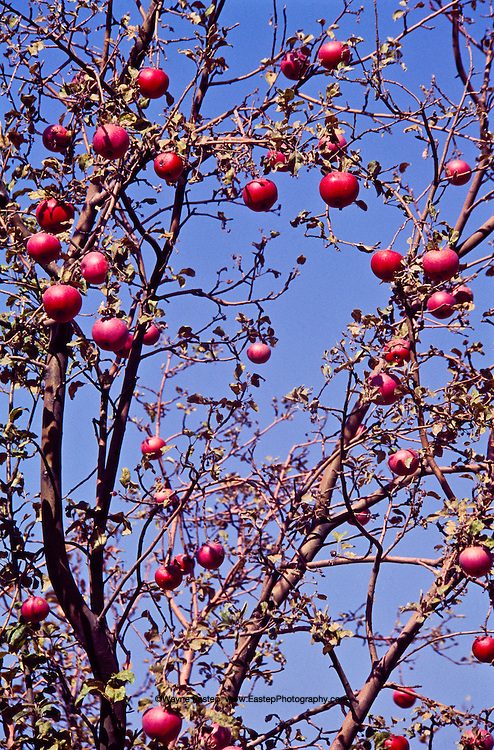
Ancient apple orchards near Almaty — the domestic apple's homeland
35,300 ha
of orchards in Kazakhstan, with apples accounting for more than 80% of that area.
As reported for the country's orchard base
317,100 t
fruit and berry production in 2024, plus 9,600 t of grapes.
2024 production figures as reported
50–5,000 kg
rated fresh input per batch across the KEMOLO FDR range.
Model selection follows product, batch plan, utilities and expansion strategy
Application areas
Products worth a closer look
Kazakhstan's agricultural base is broader than fresh sales. Each category below carries a different development path — and every one of them should start with trials, not assumptions.
Fruit & berries
Apples, berries and stone fruit can be explored as lightweight ingredients or snack components for mixes, cereals, confectionery and retail packs. Varieties behave differently — cut size, pretreatment, loading, cycle settings and packaging all affect the result.
Trial before commit
Grapes
Grapes are part of Kazakhstan's horticultural base, with 9,600 t produced in 2024. They can be tested for freeze-dried formats alongside other fruit, with variety and grade driving suitability.
Test with trials
Dairy & traditional foods
Kumys, shubat and kurt are development opportunities to investigate, not proven applications. Composition, fermentation, safety controls, rehydration performance and consumer acceptance all need validation with food technologists.
Development opportunity
Meat products
Meat is another category to treat as a development opportunity. Process parameters, food-safety controls and labelling requirements must be validated before making or marketing such products.
Development opportunity
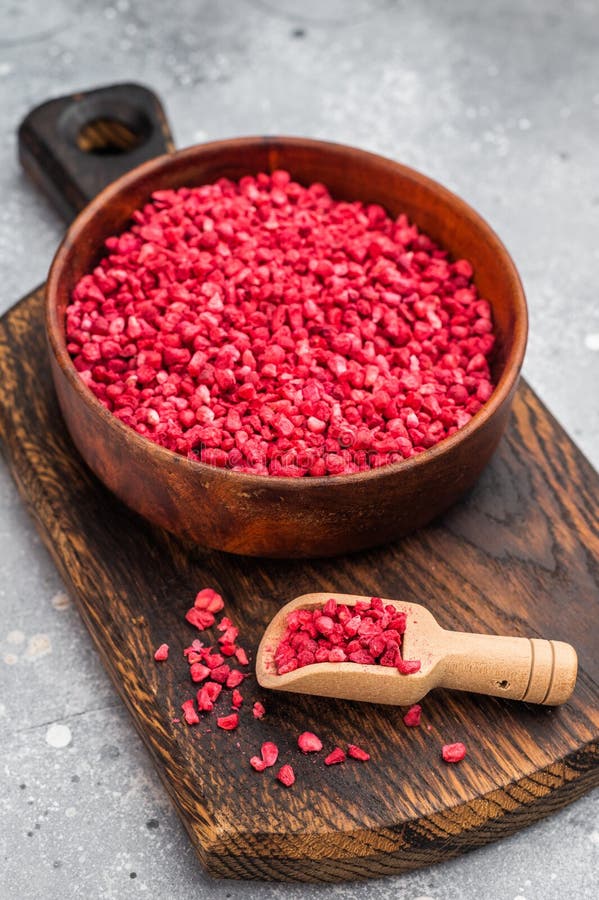
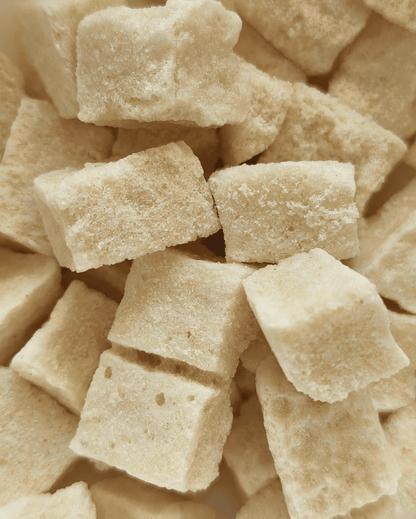
Freeze-dried berry granules — an ingredient or snack formatFreeze-dried fruit cubes for retail packs
Equipment range at a glance
Capacity that can grow with the plan
KEMOLO FDR freeze dryers are rated for fresh input from 50 to 5,000 kg per batch. The FD-100R and FD-500R below are concrete reference points for comparing capacity, footprint and electrical infrastructure.
Rated fresh input (kg per batch)
Drying area (m²)
Installed power (kW)
KEMOLO FDR model specifications
Model
Rated fresh input
Drying area
Installed power
FD-100R
100 kg/batch
10 m²
22 kW
FD-500R
500 kg/batch
50 m²
83 kW
Installed power is not the same as energy consumed per batch. It describes connected equipment load, not a guaranteed kWh figure. Actual electricity use varies with product, moisture, loading, operating conditions and cycle duration — ask for application-specific trials and measured operating data, then calculate total cost using local tariffs and your production schedule.
Evaluation path
Start with the product, then choose the machine
A sensible evaluation follows five steps. Only at the end do you compare equipment capacity against realistic throughput and facility constraints.
01
Define the product brief
What raw material is available, when is it available, what finished format do customers want, and what quality standards apply?
02
Run representative trials
Test local fruit and products at realistic batch sizes. Varieties behave differently — validate before committing to a plan.
03
Measure yield and cycle time
The economics start here: record actual yield and cycle duration from your trials, not from spec sheets.
04
Assess packaging and shelf life
Match the finished format to packaging, moisture targets and distribution needs.
05
Model utilities, labour and throughput
Cost electricity at local tariffs, size labour and throughput, then compare against facility constraints.
The best fit is the one supported by tested product results and a credible operating plan — not capacity figures alone.
Market signal
A trend worth watching: dairy exports
Traditional dairy exports were reported at approximately $13.4 million in 2024 and $17.3 million in 2025 — an increase of about 29.4%.
+29.4% · 2024 → 2025, as reported
The figures suggest rising export value, but they do not by themselves establish demand for freeze-dried dairy or any specific product. Market research, buyer conversations and regulatory checks remain essential.
Reported traditional dairy export value
USD million, 2024 vs 2025
Aggregated topics
Explore the topic
Jump to the part of this guide you need. When publishing on the KEMOLO site, each card can link to its own dedicated article.
Applications
Freeze-dried fruit applications
Mixes, cereals, confectionery and retail packs — and why variety trials decide the format.
Read the section
Equipment
FD-100R and FD-500R specifications
Fresh-input rating, drying area, installed power and what the numbers do — and don't — tell you.
Read the section
Products
Dairy: kumys, shubat and kurt
Traditional dairy as a development opportunity — validation steps before any commercial plan.
Why measured operating data — not spec-sheet figures — drives the right machine choice.
Read the section
Questions
Frequently asked questions
No. Installed power describes connected equipment load, not a guaranteed kWh figure. Actual electricity use varies with product, moisture, loading, operating conditions and cycle duration — confirm with application-specific trials and measured operating data.
The FD-100R is rated for 100 kg of fresh input per batch, with a 10 m² drying area and 22 kW installed power — a practical reference point for smaller operations or pilot lines.
Kumys, shubat, kurt and meat products are development opportunities to investigate, not proven commercial applications. Composition, safety controls, rehydration performance and consumer acceptance all need validation with qualified food technologists.
KEMOLO FDR freeze dryers are rated for fresh input from 50 to 5,000 kg per batch. Model selection should follow the actual product, batch plan, available utilities and expansion strategy.
Next step
Start with a trial, build the evidence
Request application-specific testing and measured operating data, then build your cost model with local tariffs and your intended production schedule.